

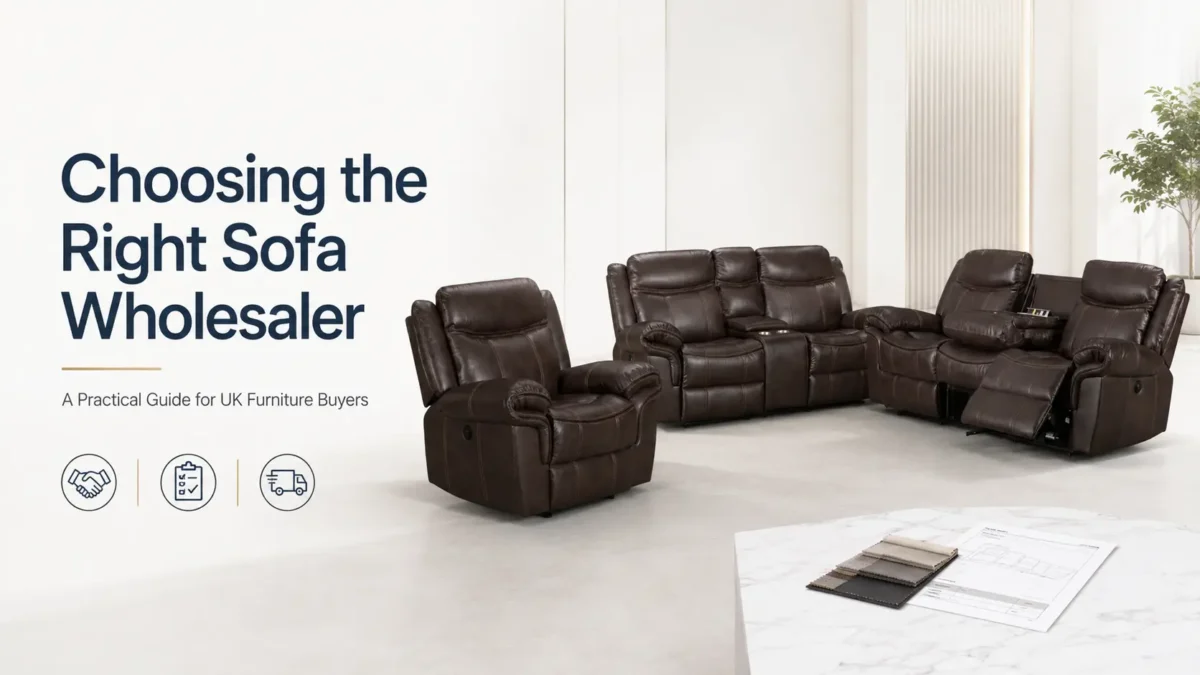
Choosing a sofa supplier is an important decision for any furniture retailer. The products you select can affect your showroom presentation, customer satisfaction, profit margins and long-term business relationships. A supplier may offer attractive designs and competitive prices, but these factors alone do not guarantee a successful partnership.
Before placing an order, it is important to understand how the supplier works, what products they offer and what support they provide after a purchase. Asking the right questions can help you compare different suppliers, identify potential problems and make better purchasing decisions.
Whether you run an independent furniture shop, an online furniture business or a larger retail operation, the following questions can help you assess a supplier before committing to an order.
8 Questions Every Furniture Retailer Should Ask
1. What Types of Sofas and Furniture Do You Supply?
Start by understanding the supplier’s product range. A supplier should offer furniture that matches your target customers, showroom style and retail price points.
Look at the available options, including:
- Fabric and leather sofas
- Two-seater and three-seater sofas
- Corner and modular sofas
- Manual and electric recliners
- Recliner chairs and specialist seating
- Contemporary and traditional designs
Ask whether the supplier offers different colours, fabrics and finishes across its collections. It is also useful to understand which products are regular ranges and which are limited or seasonal.
A well-planned product range gives retailers more flexibility when responding to changing customer preferences.
2. How Do You Ensure Sofa Quality?
Product quality should be assessed before making a purchasing commitment. Attractive photographs do not always show how a sofa is constructed or how it performs during everyday use.
Ask the supplier about the materials and construction methods used in its products.
Important areas to check include:
- Frame materials and construction
- Seat suspension and support
- Foam and cushion fillings
- Stitching and upholstery finishing
- Fabric composition and durability
- Reclining mechanisms and electrical components
Where possible, inspect a sample or finished product. Check the stitching, cushion recovery, overall stability and quality of the upholstery.
For retailers, consistent product quality is particularly important because customers expect the furniture they receive to match the product displayed in the showroom or advertised online.
3. Can You Provide Relevant UK Safety and Certification Documents?
UK furniture retailers should understand the safety requirements that apply to the upholstered products they sell.
Ask the supplier for relevant test reports, certificates and product documentation. These should relate to the actual materials, components or finished products being supplied.
Depending on the product, you may need to review:
- Upholstery and filling test information
- Fire-safety test reports
- Electrical component documentation for powered furniture
- Product identification and traceability details
- Relevant labelling information
Do not rely solely on general statements that furniture is compliant. Ask for supporting documents and check the sample descriptions, report dates, test methods and stated conclusions.
Requirements can differ according to the product and the responsibilities of the manufacturer, importer or supplier.
HFS Group provides a dedicated UK furniture certification information page where trade buyers can review available documentation for selected upholstery materials and electrical components.
4. What Are Your Prices and Minimum Order Requirements?
Understanding the full purchasing cost helps retailers plan stock and protect their margins.
When comparing quotations, ask about:
- Unit prices and applicable VAT
- Minimum order quantities
- Delivery and handling charges
- Bulk purchasing arrangements
- Payment terms
- Additional charges
- Price validity periods
The lowest unit price is not always the best commercial option. A product with a lower purchase cost may involve higher delivery expenses, longer lead times or additional handling requirements.
Calculate the total cost of purchasing each product rather than comparing prices in isolation.
You should also understand the payment arrangements before confirming an order. Clear written terms can help prevent misunderstandings later.
5. What Are Your Stock Availability and Delivery Times?
Stock availability is particularly important for furniture retailers. If a customer orders a sofa and the product is unavailable, it can create delays and damage customer confidence.
Ask the supplier:
- Is the product currently in stock?
- Is it made to order or imported?
- What is the estimated delivery lead time?
- Can popular models be reordered?
- Are different colours and fabrics available?
- How are stock changes communicated?
If you are purchasing imported furniture or planning larger orders, ask about shipping arrangements, replenishment schedules and expected arrival dates.
A reliable supply arrangement should include realistic delivery information rather than unsupported promises.
6. What Warranty and After-Sales Support Do You Provide?
After-sales support is an important part of any furniture purchasing decision.
Even well-made products can occasionally develop faults or require attention. Retailers should understand how a supplier handles these situations before placing an order.
Ask about warranty coverage for:
- Sofa frames
- Cushions and fillings
- Upholstery materials
- Reclining mechanisms
- Motors and electrical components
You should also establish how claims are submitted, what evidence is required and whether replacement parts are available.
For powered recliners and lift and rise chairs, ask about the availability of compatible motors, handsets, transformers and other components.
Clear warranty procedures can help retailers manage customer enquiries more effectively and reduce unnecessary delays.
7. Can You Provide Product Information and Marketing Materials?
Accurate product information helps your sales team explain the furniture and helps online customers make informed decisions.
Ask whether the supplier can provide:
- High-quality product photographs
- Accurate product dimensions
- Fabric and colour information
- Product specifications
- Assembly instructions
- Care and maintenance guidance
- Information about available mechanisms
These materials are useful for showroom displays, product catalogues, social media and ecommerce websites.
If you sell furniture online, consistent product information can also help reduce confusion about dimensions, materials and available options.
8. Do You Have Experience Supporting Furniture Retailers?
A supplier’s experience can tell you a great deal about its understanding of the furniture trade.
Ask how long the business has operated, which types of customers it supports and whether it has experience with retail, wholesale or commercial furniture requirements.
You should also assess the quality of communication during the enquiry process.
A good supplier should be able to explain its products, provide relevant information and communicate clearly about orders, availability and delivery arrangements.
Long-term supplier relationships depend on more than the products themselves. Consistent communication and dependable support are equally important.
How to Compare Different Sofa Suppliers
Once you have asked these questions, compare the answers rather than making a decision based only on price.
Use the following checklist when reviewing potential suppliers:
| Buying consideration | What to look for |
|---|---|
| Product range | Styles and designs that suit your customers |
| Construction | Clear information about frames and upholstery |
| Safety documents | Relevant and traceable supporting reports |
| Pricing | Transparent quotations and purchasing terms |
| Stock | Realistic availability and replenishment information |
| Delivery | Clear lead times and delivery procedures |
| Warranty | Written terms and a defined claims process |
| Trade support | Helpful communication and product information |
A supplier that provides clear answers across these areas is easier to assess and work with over time.
Understanding Different Furniture Supply Options
Furniture retailers may work with manufacturers, importers or distribution businesses, depending on the products they sell and their purchasing requirements.
Manufacturers produce furniture and may offer greater involvement in product development, upholstery choices and specifications. Importers source products from overseas manufacturers, while distributors supply selected furniture ranges to retailers and other trade customers.
Some businesses operate across more than one of these areas.
For example, HFS Group brings together HFS Upholstery and HFS Distribution, supporting different furniture requirements through its specialist collections.
The HFS Upholstery Collection focuses on handcrafted fabric sofas, upholstery materials and furniture for retailers and commercial buyers.
The HFS Distribution Collection includes imported recliner sofas, lift and rise chairs, fabric collections and trade supply solutions.
Understanding these different supply options can help retailers identify which type of business is best suited to their product requirements.
Final Thoughts: Make an Informed Supplier Decision
Choosing a sofa supplier should involve more than comparing product photographs and wholesale prices. Retailers need to consider construction quality, safety documentation, stock availability, delivery arrangements and after-sales support.
Asking these questions before placing an order can help you identify suitable suppliers and build stronger purchasing relationships.
HFS Group brings together more than 40 years of experience across sofa manufacturing, upholstery, imports, prototyping and contract furniture work. Through HFS Upholstery and HFS Distribution, we support furniture retailers, distributors, project buyers and commercial customers with different furniture collections and trade supply solutions.
If you are reviewing furniture options for your business, view the HFS Group collections or contact our team to discuss your requirements.
Frequently Asked Questions
1. What should I look for when choosing a sofa supplier?
Consider product quality, available designs, safety documentation, wholesale prices, stock availability, delivery arrangements and after-sales support. A supplier should provide clear information about its products and purchasing terms.
2. What questions should I ask before placing a furniture order?
Ask about product specifications, minimum order quantities, payment terms, delivery times, warranty coverage, replacement parts and relevant safety documentation. These details help you understand the complete purchasing arrangement.
3. How can I check the quality of a sofa before buying?
Inspect the frame, suspension, cushion fillings, stitching and upholstery finish. If possible, examine a finished sample and check the comfort, stability and construction.
4. Why is UK furniture certification important?
Relevant safety documentation helps buyers assess whether the supplied materials and products have supporting test evidence. Retailers should check documents against the specific product and applicable UK requirements.
5. Is it better to buy furniture from a manufacturer or distributor?
It depends on your requirements. Manufacturers may offer more involvement in product development, while distributors can provide access to selected furniture ranges and established supply arrangements. Compare their products, services and commercial terms before deciding.
6. Why should furniture retailers check stock availability?
Stock availability affects customer delivery expectations and the ability to fulfil orders. Understanding replenishment schedules and repeat availability can help retailers manage their showroom ranges and customer commitments.
7. What after-sales support should a furniture supplier provide?
Retailers should understand warranty coverage, the claims process, replacement component availability and procedures for dealing with damaged or faulty products.
8. How can I build a long-term relationship with a sofa supplier?
Maintain clear communication, agree written purchasing terms, monitor product quality and discuss stock requirements in advance. Regular communication helps both businesses plan future orders more effectively.