

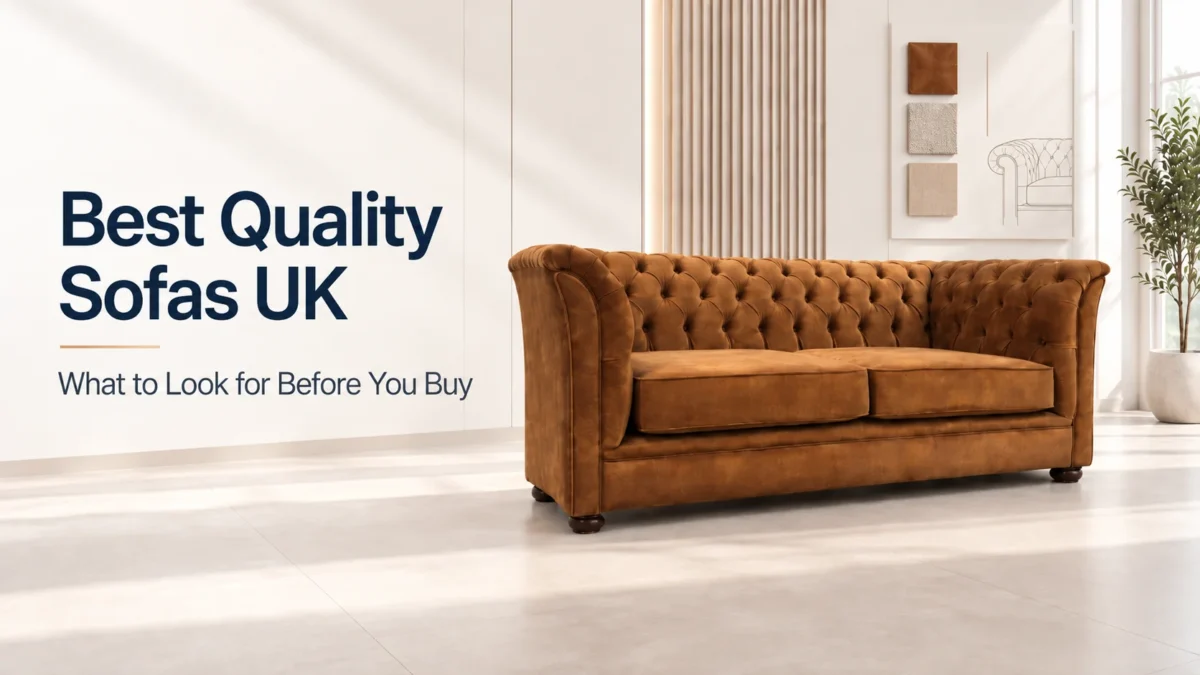
Two sofas can look almost identical in a showroom but feel very different after months or years of regular use. The difference often comes down to details that are not immediately visible, including the frame, seat support, cushion fillings and upholstery workmanship.
Knowing how to tell if a sofa is good quality can help you make a more informed buying decision. Rather than judging a sofa by its appearance or price alone, it is important to understand how it is constructed and whether its materials are suitable for everyday use. Whether you are buying furniture for your home or selecting products for a furniture showroom, this guide explains the main features to check before choosing a sofa.
What Makes a Sofa Good Quality?
A good-quality sofa combines suitable materials, reliable construction, comfortable seating and careful finishing. Every component plays a part in how the furniture looks, feels and performs over time.
The main areas to consider include:
- Frame materials and construction
- Seat suspension and support
- Cushion fillings
- Upholstery fabric or leather
- Stitching and finishing
- Seat comfort and dimensions
- Product specifications and warranty
No single material or manufacturing method guarantees quality. The complete sofa needs to be assessed according to its intended use.
1. Check the Sofa Frame and Construction
The frame provides the main structure of a sofa. It supports the seats, backrest and arms, so its construction has an important effect on stability.
Sofa frames can be made using solid timber, plywood, engineered wood, metal or combinations of materials. Each material has different characteristics, and the suitability depends on the design and construction.
When inspecting a sofa, look for:
- A stable structure during normal use
- Properly joined and reinforced frame sections
- Supported arms and backrests
- No unusual movement or twisting
- Clear information about the materials used
If you are visiting a showroom, sit on different sections of the sofa. Check whether the structure feels stable when sitting down and standing up.
It is also worth asking about the frame warranty and whether the manufacturer carries out relevant structural or durability testing.
2. Understand the Sofa Suspension System
The suspension system sits beneath the seat cushions and helps support the weight of people using the sofa.
Common suspension systems include:
- Serpentine or sinuous springs
- Other spring-based systems
- Elasticated webbing
- Engineered support systems
- Combinations of different methods
Are Sofa Springs Better Than Webbing?
Not necessarily. Both springs and webbing can provide effective seat support when they are properly selected and fitted. The quality of the components, their positioning, tension and attachment to the frame all influence performance.
Instead of choosing a sofa simply because it has springs, ask how its suspension system is designed and whether it suits the expected level of use.
3. Choose the Right Cushion Filling
Cushion filling affects how a sofa feels when you sit on it, how well it maintains its appearance and how much maintenance it requires. Different fillings provide different levels of softness, support and shape retention.
| Cushion filling | Typical feel | Maintenance |
|---|---|---|
| Foam | Structured and supportive | Generally less plumping |
| Fibre | Soft and relaxed | Regular plumping |
| Feather | Soft and sink-in | Frequent plumping and turning |
| Combination | Varies by construction | Depends on filling materials |
Foam vs Fibre Sofa Cushions
Foam cushions generally provide a more structured sitting experience and tend to retain their shape without frequent plumping.
Fibre cushions usually offer a softer feel but may need regular attention to maintain an even appearance. Neither option is automatically better. The right choice depends on your comfort preferences, intended use and maintenance expectations.
When buying a sofa, ask about the type of filling, its specification and how the cushions should be maintained.
4. Inspect Upholstery Fabric and Stitching
Upholstery is one of the most visible parts of a sofa. It also influences the furniture’s appearance, comfort and suitability for different environments.
Common upholstery options include:
- Velvet
- Chenille
- Linen-style fabrics
- Polyester blends
- Leather and leather-look materials
The fabric should be suitable for the intended use. For example, a sofa in a busy family living room may need different upholstery characteristics from furniture in a formal reception area.
Look closely at the following details:
- Stitching and seam alignment
- Piping around cushions and arms
- Fabric tension and overall fit
- Pattern alignment
- Corners and edges
- Cushion covers and finishing
Also ask about the fabric composition, cleaning instructions and relevant durability information. You can view the HFS fabric collection to see different upholstery options available across selected furniture models.
5. Test Sofa Comfort Before Buying
A sofa can be well constructed and still be unsuitable for your needs. Comfort depends on personal preference, body size and how the furniture will be used.
Before choosing a sofa, consider:
- Seat height
- Seat depth
- Cushion firmness
- Backrest height
- Armrest position
- Lower back support
- Ease of sitting down and standing up
A deep seat may suit someone who prefers a relaxed sitting position, while another person may find a shallower seat more comfortable.
Similarly, a firm cushion is not necessarily a sign of better quality. It simply provides a different level of support. If possible, spend several minutes sitting on the sofa rather than making a decision after a quick test.
6. Check the Sofa’s Overall Finish
Good workmanship can often be seen in the small details. Inspect the sofa from different angles and pay attention to areas that may receive less attention during a quick showroom visit.
Check:
- Whether the fabric sits evenly across the frame
- Whether seams look consistent
- Whether cushions fit properly
- Whether the arms feel supported
- Whether the feet are securely fitted
- Whether decorative details are finished neatly
Small variations can occur with natural materials and textured upholstery. However, the overall finish should match the product’s stated specification.
If you are purchasing a sofa with removable cushions, check the covers, zips and ease of maintenance as well.
7. Does a More Expensive Sofa Mean Better Quality?
A higher price does not automatically mean a sofa is better made. The selling price can be influenced by materials, design, manufacturing costs, upholstery options, brand positioning and retail overheads.
A more expensive sofa may include premium materials or additional features, but buyers should still assess its actual construction and specifications.
Compare similar products by looking at:
- Frame materials
- Suspension systems
- Cushion fillings
- Upholstery quality
- Comfort and dimensions
- Warranty coverage
- After-sales support
This approach helps you understand what you are paying for rather than relying on price as a measure of quality.
8. How Long Should a Good Quality Sofa Last?
There is no fixed lifespan that applies to every sofa. Its useful life depends on how it is constructed, how often it is used and how well it is maintained.
Several factors can affect its condition over time:
- Frequency of use
- Frame and suspension quality
- Cushion materials
- Upholstery durability
- Cleaning and maintenance
- Children and pets
- Availability of replacement components
A sofa used daily by several people may experience different levels of wear from one placed in a formal sitting room. Check the manufacturer’s care guidance and warranty conditions. Regular maintenance can also help preserve the appearance and comfort of the furniture.
9. How to Check Sofa Quality When Buying Online
Buying a sofa online requires additional care because you may not be able to inspect or test it before ordering.
Before purchasing, check:
- Full sofa dimensions, including width, height and depth.
- Seat height and seat depth.
- Frame and cushion specifications.
- Upholstery material and available colours.
- Product photographs from different angles.
- Delivery conditions and access requirements.
- Warranty and applicable returns information.
- Care and maintenance instructions.
Measure your room, doorways, hallways and staircases before ordering. A sofa may fit comfortably in your living room but still be difficult to move through the property.
Where available, request a fabric sample so you can assess the material and colour in your own lighting.
10. What Furniture Retailers Should Check Before Selecting a Sofa Range
Furniture retailers need to consider more than appearance and comfort when deciding which products to display and sell. A sofa range should meet the expectations of its target customers while offering suitable product specifications and dependable supply information.
Before selecting furniture, retailers should review:
- Frame and construction details
- Seat suspension and cushion fillings
- Upholstery options
- Product dimensions and specifications
- Relevant safety documentation
- Stock availability and lead times
- Warranty arrangements
- Replacement parts and after-sales procedures
Consistency is particularly important when ordering multiple products. Retailers should understand whether the same specifications and upholstery options will remain available for future orders.
For businesses reviewing their furniture ranges, the HFS Upholstery Collection features handcrafted fabric sofas and upholstery options for retailers and commercial buyers.
11. Understand UK Furniture Safety Information
Quality assessment should also include relevant product safety information.
Domestic upholstered furniture supplied in the UK is subject to the Furniture and Furnishings (Fire) (Safety) Regulations.
Amendments that came into force on 30 October 2025 removed the separate display or swing-label requirement for new products under these regulations. However, permanent-label requirements remain.
Buyers and retailers should request relevant product documentation and check that test reports relate to the materials or components being supplied.
HFS Group also provides UK furniture certification documents for selected upholstery materials and electrical components. Each report should be checked against its specific sample or component.
Sofa Quality Buying Checklist
Before making a purchasing decision, use this checklist:
| Area | What to check |
|---|---|
| Frame | Stability, materials and construction |
| Suspension | Suitable seat support |
| Cushions | Filling type and maintenance |
| Upholstery | Material, stitching and durability information |
| Comfort | Seat height, depth and firmness |
| Finishing | Seams, corners and overall workmanship |
| Dimensions | Room and delivery access |
| Warranty | Written coverage and conditions |
| Documentation | Relevant product information |
| Support | Repair and replacement procedures |
The best sofa for your needs is not necessarily the most expensive one. It is the product that combines suitable construction, comfortable seating, appropriate materials and reliable product information.
Final Thoughts
Knowing how to assess sofa quality makes it easier to compare different designs and understand the features that matter before buying. The frame, suspension, cushion filling, upholstery and finishing should all be considered together. Comfort, dimensions, maintenance and warranty arrangements are equally important when selecting furniture for everyday use.
For furniture retailers, these checks can also help when deciding which products to introduce into a showroom or wider collection. HFS Group brings together more than 40 years of experience across sofa manufacturing, upholstery, imports, prototyping and contract furniture work. Through HFS Upholstery and HFS Distribution, we support UK retailers, wholesalers and commercial buyers with different furniture collections.
Explore the HFS furniture collections to review available ranges or contact our team to discuss your furniture requirements.
Frequently Asked Questions
1. How can you tell if a sofa is good quality?
Check its frame construction, suspension system, cushion fillings, upholstery, stitching, comfort and warranty. Consider the complete product rather than judging it by appearance alone.
2. What type of sofa frame is best?
There is no single material that guarantees the best frame. Suitable materials, strong joints, proper reinforcement and appropriate construction are more important.
3. Are sofa springs better than webbing?
Not always. Both can work effectively when properly designed and fitted. The complete suspension system and its construction determine how well it performs.
4. Is foam or fibre better for sofa cushions?
Foam generally provides a more structured and supportive feel, while fibre offers a softer sitting experience. The right option depends on personal preference and maintenance requirements.
5. Does an expensive sofa mean better quality?
No. Price alone does not guarantee good construction or durability. Compare materials, workmanship, comfort and warranty before buying.
6. What should I check when buying a sofa online?
Check dimensions, frame details, cushion fillings, upholstery specifications, delivery access, warranty and returns information. Request a material sample where possible.
7. Why is sofa upholstery quality important?
Upholstery affects the sofa’s appearance, comfort and suitability for different environments. Fabric composition, stitching, finishing and care requirements should all be considered.
8. What should furniture retailers check before stocking sofas?
Retailers should assess construction, upholstery, product specifications, safety documentation, stock availability, warranty terms and after-sales support before selecting a range.