

Single vs Dual Motor Riser Recliners: UK Guide
August 31, 2026
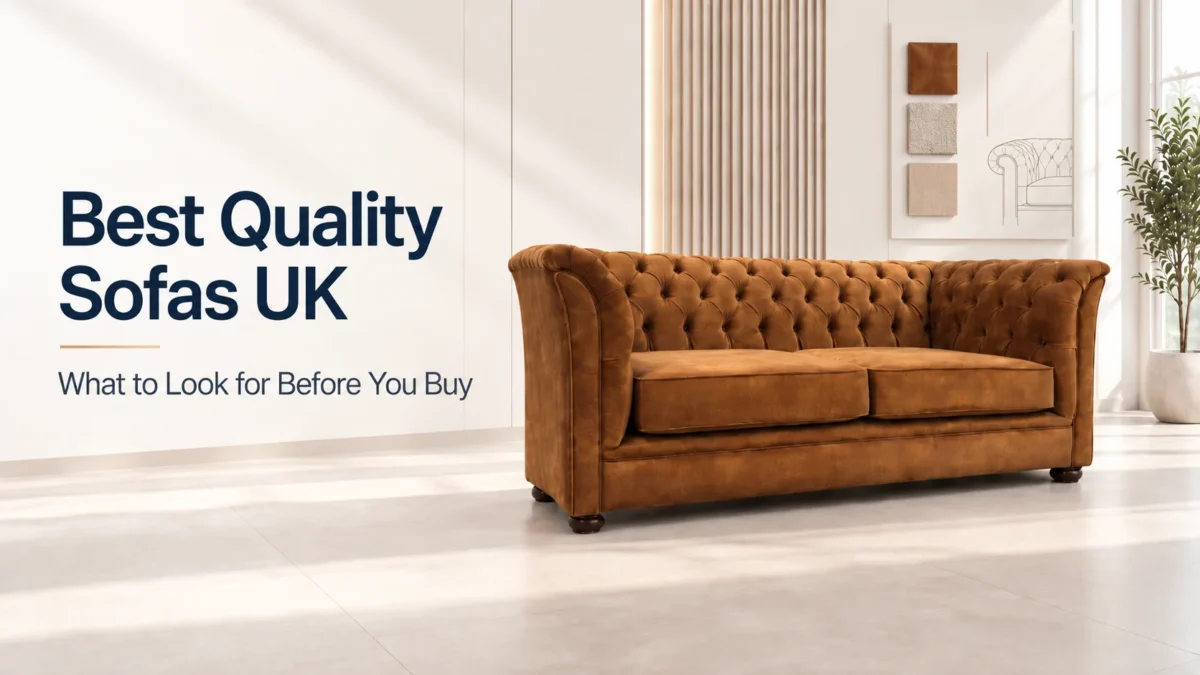
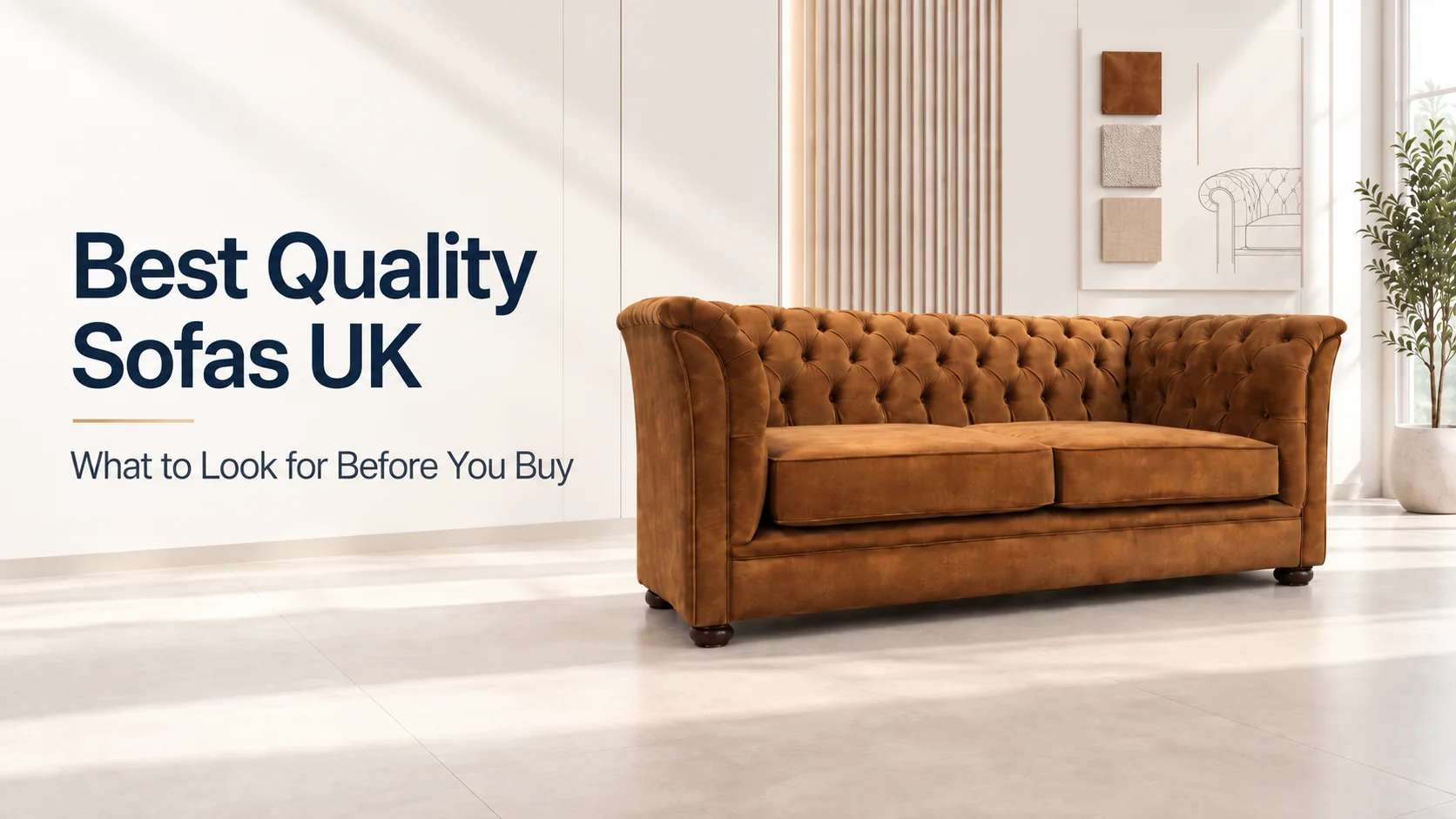
Best Quality Sofas UK: What to Look for Before You Buy
Two sofas can look almost identical in a showroom but feel very different after months or years of regular use. The difference is often found in the parts you cannot immediately see: the frame, seat support, cushion filling, construction and how well the upholstery has been applied.
If you are looking for the best quality sofas UK retailers offer, appearance and price are useful starting points, but neither tells the whole story. A good sofa needs to suit the person using it, the room it will live in and the level of everyday use it is likely to receive.
This guide explains the practical details UK homeowners and furniture buyers can check before making a decision. It also covers what retailers and trade buyers should look for when choosing sofa ranges to stock.
How Can You Tell if a Sofa Is Good Quality?
A good-quality sofa should feel stable, provide suitable seat support and use cushions, upholstery and construction appropriate for its intended use. Check the frame, suspension, cushion filling, seams, comfort, dimensions, warranty and product specification. No single material, brand name, price or country of manufacture guarantees quality on its own.
What Actually Makes a Good Quality Sofa?
Sofa quality is the result of several components working together.
The main areas to assess are:
- Frame and joint construction
- Seat suspension or support system
- Cushion filling
- Upholstery material and workmanship
- Comfort and dimensions
- Consistency of manufacturing
- Warranty and after-sales support
- Suitability for the way the sofa will actually be used
A strong frame does not automatically make an uncomfortable sofa a good choice. In the same way, a very soft and comfortable sofa is not necessarily well constructed. The complete product needs to be considered.
Start With the Sofa Frame
The frame forms the structure of the sofa and supports the seats, back and arms. It should feel stable when the sofa is used normally, without excessive movement, twisting or unexplained noise.
Many buyers are told to look only for hardwood frames, but frame quality is more complicated than the name of one material. Sofa construction can include solid timber, plywood, engineered wood, metal or combinations of materials. What matters is whether those materials are suitable for the design and have been joined and supported properly.
What Should You Ask About the Frame?
Before buying, ask:
- What materials are used in the main frame?
- How are the important joints constructed and reinforced?
- Does the manufacturer carry out relevant structural or durability testing?
- What part of the frame is covered by the warranty?
If you are in a showroom, sit on different parts of the sofa rather than testing only the centre seat. The sofa should feel stable during normal sitting and standing.
Furniture Industry Research Association guidance also makes an important point: structural test results need to be understood in the context of the product and its intended use. A single material name or isolated test result should not be treated as a complete measure of quality.
Understand the Sofa Suspension
Underneath the seat cushions is a support system that helps distribute weight and affects the way the sofa feels.
Depending on the design, this may include:
- Serpentine or sinuous springs
- Other spring systems
- Elasticated webbing
- Engineered support systems
- A combination of different methods
Are Springs Better Than Webbing?
Not automatically. A well-designed webbing system can be suitable for one sofa, while another design may use springs effectively. The quality of the components, tension, fixing method and overall construction matter more than simply seeing the word “sprung” in a specification.
Instead of asking only whether a sofa contains springs, ask how the seat is supported and whether the system is designed for the expected level of use.
Choose Cushion Filling for the Way You Like to Sit
Cushion filling has a major effect on comfort, appearance and maintenance. There is no universal “best sofa filling” because different buyers want different things from a sofa.
| Filling Type | Typical Feel | Maintenance | Worth Considering If |
|---|---|---|---|
| Foam | More structured and supportive | Usually lower | You prefer a defined seat shape |
| Fibre | Softer and more relaxed | Usually needs regular plumping | You prefer a softer sitting feel |
| Feather | Soft and sink-in | Requires regular plumping and turning | You value softness and do not mind maintenance |
| Combination filling | Varies by construction | Depends on materials used | You want a balance of support and softness |
Which?’s current UK sofa-buying guidance also identifies foam, fibre and feather as the main filling types and notes that each provides a different combination of feel and maintenance.
Foam vs Fibre Sofa Cushions: Which Is Better?
Neither is better for everyone.
Foam generally provides a more structured shape and may require less regular plumping. Fibre tends to create a softer, more relaxed feel but usually needs more maintenance to keep cushions looking even.
Think about how you actually use the sofa. A buyer who wants a neat appearance with minimal daily attention may make a different choice from someone who prefers a soft, relaxed seat.
Inspect the Upholstery and Stitching
Fabric or leather is the most visible part of a sofa, so workmanship is easier to inspect here than inside the frame.
Look closely at:
- Seams and stitching
- Piping around cushions and arms
- Fabric alignment where patterns are used
- Upholstery tension
- Corners and edges
- Zips on removable cushions
- Consistency between individual seats
Small variations may be normal, particularly with natural materials or textured fabrics, but the overall finish should be appropriate for the sofa’s specification and price point.
Do not choose upholstery by colour alone. Ask about fibre composition, cleaning guidance and suitability for the intended household. You can explore the HFS fabric and upholstery collections or read our guide to choosing sofa upholstery for more detail.
Comfort Is Part of Sofa Quality
A sofa can be well made and still be the wrong sofa for you.
Comfort depends partly on personal preference and body size, so check:
- Seat height
- Seat depth
- Seat firmness
- Backrest height and angle
- Arm height
- Cushion support
- How easy it is to sit down and stand up
A deep, soft sofa may feel comfortable to one person but awkward to another. Likewise, a firmer seat is not automatically higher quality; it simply provides a different sitting experience.
How to Test a Sofa in a Showroom
If possible, spend a few minutes testing the sofa rather than sitting down briefly and making an immediate decision.
- Sit normally for several minutes. Give yourself time to notice seat depth, support and posture.
- Try more than one seat. Check whether the sofa feels consistent from one position to another.
- Check stability. Normal movement should not make the sofa feel unstable.
- Look at the cushions after standing up. Consider how they recover and whether their appearance suits your expectations.
- Inspect the seams and corners. Look for consistent workmanship.
- Check the arms. They should feel properly supported during normal use.
- Ask what is inside. Request information about the frame, suspension and cushion filling.
- Ask for the written specification and warranty. Do not rely only on verbal descriptions.
If several people in your household will use the sofa regularly, let them test it too. One person’s idea of the perfect seat may be very different from another’s.
Does a More Expensive Sofa Mean Better Quality?
No. A higher price does not automatically guarantee a better sofa.
Price can be influenced by many factors, including:
- Materials
- Manufacturing costs
- Design and development
- Upholstery choice
- Customisation
- Brand positioning
- Retail overheads
- Delivery and service
Better materials and more skilled construction can cost more, but the selling price alone cannot prove durability or comfort.
This is why buyers searching for the best quality sofa brands UK should look beyond the brand name and compare the specification of the individual sofa they are considering.
How Long Should a Good Quality Sofa Last?
There is no reliable single lifespan that applies to every sofa.
How long a sofa remains comfortable and serviceable depends on factors such as:
- How often it is used
- The number of people using it
- Frame and suspension construction
- Cushion materials
- Upholstery
- Children and pets
- Cleaning and maintenance
- Accidental damage
- Whether components can be repaired or replaced
You may see broad lifespan estimates online, but these should not be treated as guarantees. A better approach is to review the sofa’s construction, warranty and suitability for the level of use expected in your home.
Are UK-Made Sofas Better Than Imported Sofas?
Country of manufacture alone does not determine sofa quality.
A UK-made sofa can be very well made, but so can an imported sofa produced by a capable manufacturer using appropriate materials and quality controls.
Instead, compare:
- Construction
- Materials
- Workmanship
- Product specification
- Relevant testing
- Consistency
- Warranty
- Supplier support
HFS Group works across different areas of furniture supply. Buyers can explore the HFS Upholstery Collection, our wider furniture collections, and the Linea Pelle Italian leather sofa collection depending on their requirements.
Should You Choose a Sofa by Brand?
A recognised brand can provide useful information about its manufacturing history, customer service and product range, but it should not replace proper product checks.
Even within the same brand, individual ranges can have different fillings, fabrics, frames, warranties and price points.
Before choosing, check the exact model’s:
- Construction and materials
- Dimensions
- Comfort
- Warranty
- Delivery terms
- Care requirements
- Repair or replacement support
Independent consumer research can also be useful when comparing retailers or brands, particularly when the methodology and sample size are clearly explained.
What to Check When Buying a Sofa Online
Buying online makes accurate specifications even more important because you may not have sat on the sofa before ordering.
Before placing an order:
- Check the full external dimensions.
- Check seat height and seat depth.
- Measure doors, hallways, staircases and tight corners.
- Order a fabric or leather sample where available.
- Check the filling and upholstery specification.
- Read the delivery conditions.
- Review the warranty and applicable returns information.
- Remember that screen colours may not perfectly reproduce the real upholstery.
Measurements are particularly important. A sofa that fits comfortably in the room still needs to reach that room through the available delivery route.
Check UK Furniture Safety Information
New domestic upholstered furniture supplied in the UK is subject to the Furniture and Furnishings (Fire) (Safety) Regulations.
Changes introduced in October 2025 removed the previous separate display or swing-label requirement, but the permanent-label requirement remains. Manufacturers, importers, distributors and retailers still need to understand the requirements that apply to the products they supply.
For buyers, the useful question is whether the retailer or supplier can provide clear and traceable product information where required.
Trade buyers can also review HFS Group’s UK certification information for available reports relating to identified materials and products.
What Should Furniture Retailers Check Before Stocking a Sofa Range?
Retail buyers need to assess quality from a different angle because a sofa that performs poorly can affect customer satisfaction, warranty costs and the retailer’s reputation.
Before committing showroom space or purchasing stock, check:
- Frame and construction specification
- Seat suspension and cushion filling
- Upholstery options
- Relevant testing and documentation
- Product dimensions and accurate images
- Current stock and lead times
- Repeat availability
- Warranty terms
- Damage and claims procedures
- Replacement components where relevant
- Supplier communication and after-sales support
A reliable supplier should be able to answer these questions clearly rather than relying only on photographs and marketing descriptions.
UK retailers can explore the HFS Upholstery Collection or read our guide to choosing sofa wholesalers in the UK when reviewing trade supply options.
Quality Sofa Buying Checklist
Before buying a sofa, check:
- Frame: Does the sofa feel stable, and is the construction explained?
- Suspension: What supports the seat cushions?
- Filling: Does the cushion type suit your comfort and maintenance preferences?
- Upholstery: Is the material appropriate for your household and expected use?
- Workmanship: Are seams, piping and finishes consistent?
- Comfort: Is the seat height, depth and support right for you?
- Dimensions: Will the sofa fit both the room and delivery route?
- Warranty: What parts of the sofa are covered and for how long?
- Product information: Are important specifications clearly available?
- After-sales support: What happens if something goes wrong?
The best quality sofa is not simply the most expensive or the one made from the most impressive-sounding material. It is a sofa that is well constructed for its intended use, comfortable for the people buying it and supported by clear product information and dependable after-sales service.
FAQs
How can you tell if a sofa is good quality?
Check the complete construction rather than one feature. Look at frame stability, seat support, cushion filling, upholstery workmanship, comfort, product specification and warranty. A good supplier should be able to explain what is inside the sofa as clearly as what you can see on the outside.
What type of sofa frame is best?
There is no single frame material that is automatically best for every sofa. Timber, engineered wood, plywood, metal and combinations can all be used effectively. Good design, appropriate materials, sound joints and suitable structural performance matter more than one material name.
Are sofa springs better than webbing?
Not necessarily. Both springs and webbing can form part of an effective seat-support system. Quality depends on the materials, construction, fixing method and how the system has been designed for the sofa’s intended use.
Is foam or fibre better for sofa cushions?
It depends on the sitting experience you prefer. Foam generally feels more structured and tends to hold its shape with less plumping. Fibre usually feels softer and more relaxed but often requires more regular maintenance.
Does a more expensive sofa mean better quality?
No. Higher prices can reflect materials and workmanship, but they can also reflect design, brand positioning, retail costs, customisation and other factors. Compare the actual construction, comfort, specification and warranty rather than using price alone as a quality measure.
How long should a good-quality sofa last?
There is no fixed lifespan that applies to every sofa. Usage, construction, cushion materials, upholstery, maintenance and the household all affect longevity. Treat published lifespan figures as general estimates rather than guarantees for a specific product.
Are UK-made sofas better quality than imported sofas?
Not automatically. Manufacturing location does not guarantee quality. Compare the materials, construction, workmanship, product specification, relevant testing, warranty and supplier support for the individual sofa.
What should I check before buying a sofa online?
Check external and seat dimensions, filling, upholstery specification, fabric samples where available, delivery access, warranty and returns information. Measure doors, stairs and hallways as well as the space where the sofa will eventually sit.
Looking for furniture for your home or business? Explore the HFS furniture collections, including upholstery, recliner and Italian leather sofa ranges. Furniture retailers and trade buyers can also contact HFS Group to discuss product and supply requirements.