
Wholesale Fabric Sofas UK: A Complete Guide to Upholstery
August 18, 2026
Single vs Dual Motor Riser Recliners: UK Guide
August 31, 2026
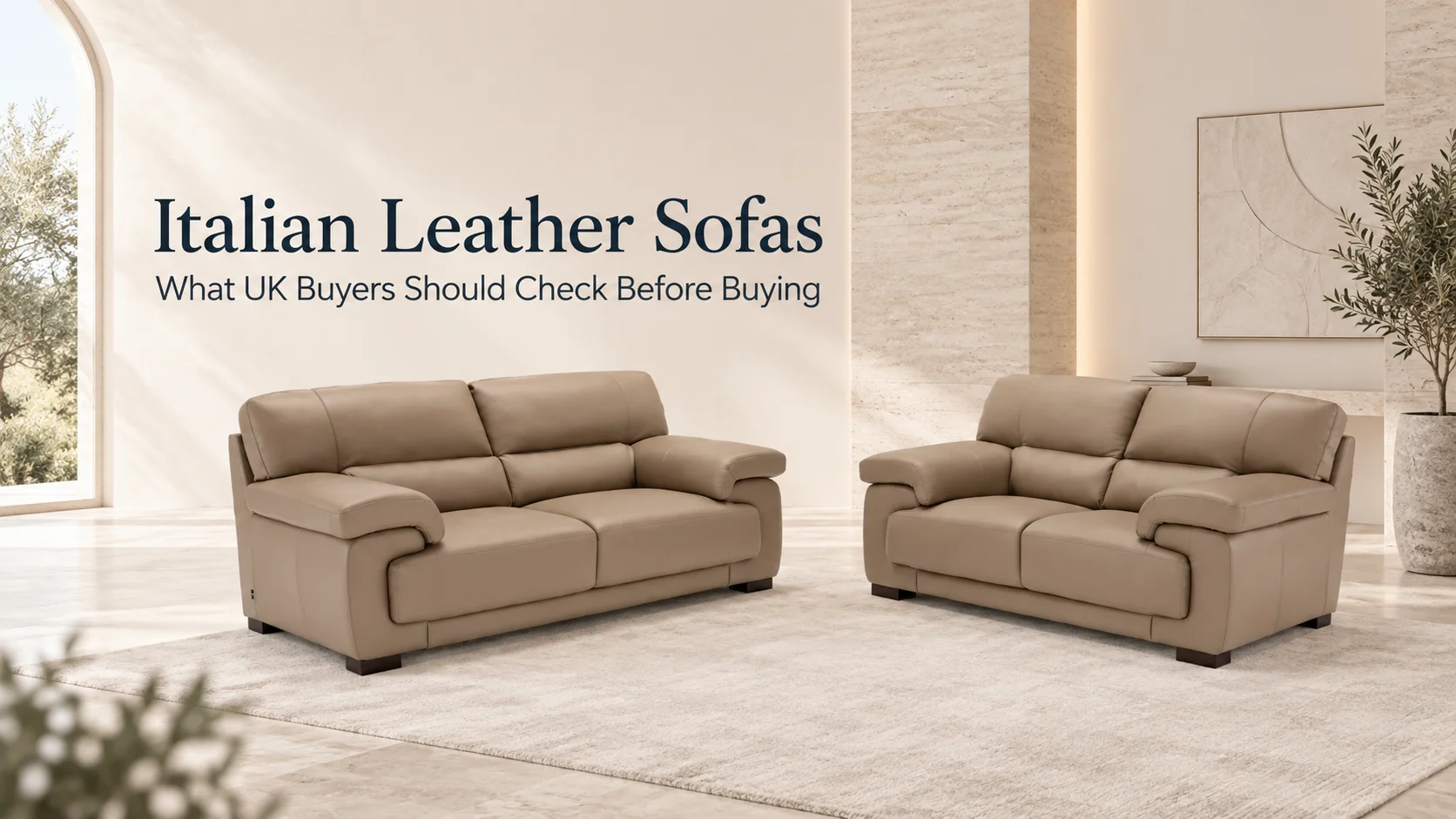
Italian Leather Sofas: What UK Furniture Retailers Should Check Before Buying
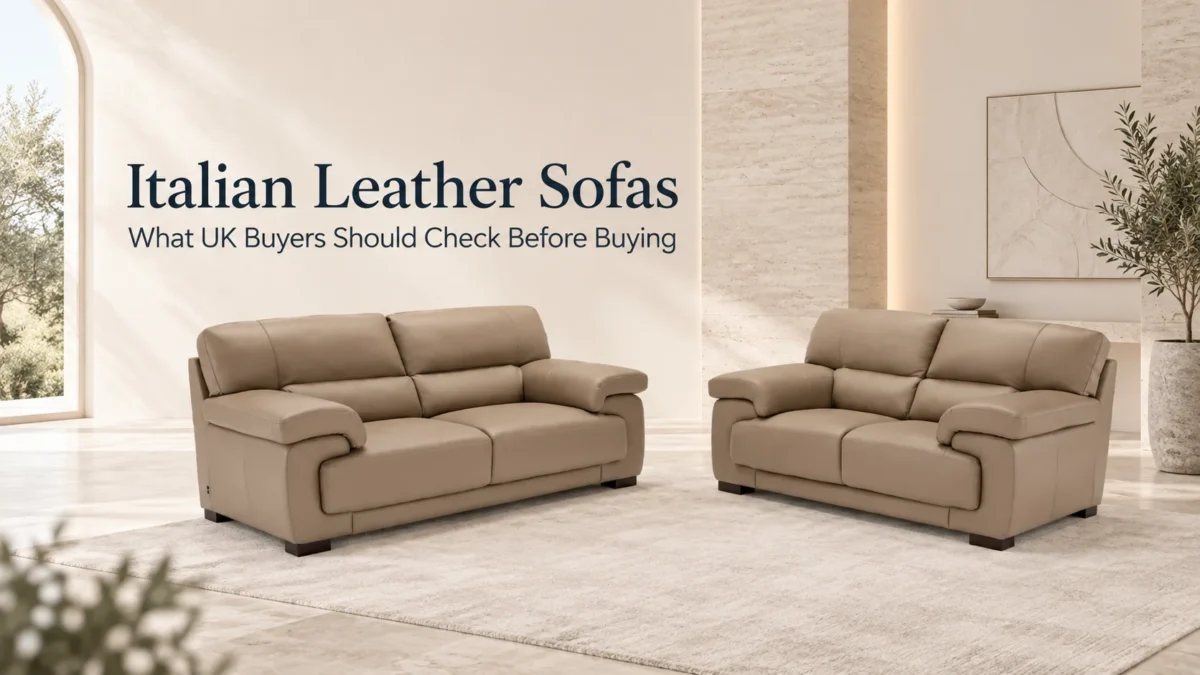
Before buying Italian leather sofas, check the leather specification, manufacturing origin, construction, available models and colours, UK compliance information, lead times, warranty and after-sales support. Trade buyers should also confirm pricing, order quantities and repeat availability. Home buyers should focus on comfort, dimensions, care requirements and everyday suitability.
Italian leather sofas appeal to both furniture retailers and home buyers because they combine distinctive design with the natural look and feel of leather. But “Italian leather sofa” is not a complete product specification. Buyers still need to understand the leather, construction, manufacturing origin and support behind the product.
For retailers, these checks help protect margin, showroom investment and customer satisfaction. For consumers, they make it easier to compare sofas on quality, comfort and suitability rather than appearance alone.
This guide explains what to check whether you are comparing an Italian leather sofa supplier in the UK, sourcing wholesale Italian leather sofas UK retailers can confidently sell, or choosing an Italian leather sofa for your own home.
Why Italian Leather Sofas Appeal to UK Buyers
Italian sofas are often chosen for their design, upholstery detail and choice of contemporary and classic styles. Leather also has a distinctive texture and natural variation that can give a sofa more character over time.
For retailers, Italian-made leather sofas can provide a premium option within a wider furniture range. For home buyers, the priorities are usually more personal: comfort, dimensions, colour, maintenance and how well the sofa suits everyday living.
Check What “Italian Leather Sofa” Actually Means
Start with two separate questions: where was the sofa manufactured? and what type of leather has been used? These are related, but they do not mean the same thing.
Terms such as Italian style, Italian leather and Made in Italy can communicate different things. If manufacturing origin matters to you or your customers, ask the supplier to confirm where the finished sofa is made and provide clear information about the leather used.
Ask Where the Sofa Is Made
Retailers need accurate product information for showroom staff, ecommerce listings and customer enquiries. Clear manufacturing details help avoid vague or misleading product descriptions.
HFS Group’s Linea Pelle Italian leather sofa collection is supplied to UK retail, trade and selected contract buyers through an Italian manufacturing partnership, with options to discuss repeat supply, container orders and selected bespoke development.
Ask for the Exact Leather Specification
Do not stop at the phrase “genuine leather”. Ask what type and finish of leather is used, where it is used on the sofa and whether the same specification applies across different colours or versions.
Retailers should keep this information with the product record so staff and customers receive consistent answers.
Understand the Leather Before Comparing Prices
Leather terminology can be confusing, so compare the actual specification rather than assuming that one familiar term automatically means a better sofa.
Full-Grain and Top-Grain Leather
Full-grain leather retains the natural grain surface with minimal correction, so natural markings may remain visible. Top-grain leather also uses the upper part of the hide but may be corrected or finished to create a more consistent appearance.
Neither term tells you everything about the finished product. The leather finish, thickness, colour treatment, upholstery workmanship and intended use also matter.
Natural Variation Is Normal
Real leather can show differences in grain, texture and shade. These variations are not automatically defects. However, buyers should still inspect the overall finish, stitching and presentation carefully.
Home buyers should also ask the retailer what natural variation to expect before delivery.
Inspect the Sofa Beyond the Leather
A premium leather covering cannot compensate for weak construction. Where possible, retailers should inspect a sample before committing to a larger order. Consumers should sit on the sofa and test the seats they are most likely to use.
Check the frame, seat support, cushioning, stitching, seams, feet and overall stability. Look at how the leather sits around the arms, corners and cushion edges.
If the sofa reclines, operate the mechanism several times and ask how replacement components are handled. Also compare seat height, seat depth and back support. Comfort is personal, so specifications matter as much as appearance.
Choose Models That Fit the Customer and the Room
Retail buyers should build a range around their actual customer base. A useful mix may include different sofa sizes, chairs, colours and contemporary or traditional designs rather than too many similar models.
Home buyers should measure the room, doors and delivery route before ordering. For reclining or motion furniture, check the space required behind and in front of the sofa.
Trade buyers should also ask which models and leather colours are expected to remain available. A display sofa carries costs beyond the purchase price, including showroom space, photography, website content, advertising and staff training.
Check UK Safety and Product Documentation
Domestic upholstered furniture supplied in the UK is subject to the Furniture and Furnishings (Fire) (Safety) Regulations. Current requirements cover areas including fillings, cigarette resistance, cover performance and permanent labelling.
The separate display-label requirement was removed in October 2025, but the permanent-label requirement remains.
Retailers should request relevant, traceable information that matches the product being supplied rather than accepting a general compliance statement. Buyers can also review HFS Group’s UK furniture certification documents for available test information relating to identified materials and components.
For consumers, the practical approach is to buy from a retailer that can clearly identify the product and answer questions about its safety information and labelling.
Compare the Real Buying Cost
For a consumer, total cost may include delivery, optional assembly and any care products or protection plan.
For retailers and wholesalers, the calculation is wider. Consider the trade price together with freight, delivery, storage, order quantity, finance tied up in stock, warranty administration and the margin available at the intended selling price.
This matters when comparing an Italian sofa wholesaler UK businesses can order through locally with direct container purchasing. A lower unit price does not always create the best commercial result once stock risk and logistics are included.
UK Supply or Direct Container Order?
For trade buyers, the right supply route depends on sales volume, storage capacity and the level of stock commitment the business can manage.
| Buying Factor | UK / Distributor Supply | Direct Container Supply |
|---|---|---|
| Initial commitment | Often suited to smaller or regular replenishment | Better suited to planned higher-volume purchasing |
| Lead time | Can be shorter when stock is available | Requires a longer purchasing and shipping cycle |
| Storage requirement | Lower | Higher |
| Cash tied up in stock | Generally lower | Generally higher |
| Best suited to | Retailers wanting flexible replenishment | Established buyers with predictable volume |
Do not assume minimum quantities or lead times. Ask for the current commercial terms for the exact range being considered. HFS invites trade buyers to discuss both UK supply and direct container requirements for the Linea Pelle collection.
Check Repeat Availability and After-Sales Support
Repeat supply becomes important once a model begins to sell. Retailers should ask whether the model is expected to remain in production, whether the same leather colours can be reordered and how product changes or discontinuations are communicated.
Also ask for written warranty terms. Check what is covered, how a claim is raised and who manages repair or replacement.
For motion furniture, ask about mechanisms and electrical components as well as the frame and upholstery. Consumers should keep the invoice, product details and care information after delivery.
Ask About Bespoke or Exclusive Sofa Models
Established retailers sometimes need more than a standard catalogue range. Depending on the project, specification and volume, some manufacturing relationships can support prototype development, model refinement or exclusive designs.
HFS states that selected clients and suitable projects can discuss prototype development and exclusive sofa opportunities through its Italian manufacturing partner. Discuss these requirements directly, as availability depends on the specific project.
Italian Leather Sofa Buying Checklist
- Confirm where the finished sofa is manufactured.
- Ask for the exact leather type and finish.
- Inspect the frame, cushioning, stitching and overall finish.
- Check dimensions, comfort and delivery access.
- Review relevant UK safety and product documentation.
- For trade orders, calculate the full purchasing and stocking cost.
- Confirm lead times and repeat availability.
- Ask for written warranty and after-sales terms.
- For larger orders, compare UK supply with direct container purchasing.
Choosing an Italian Leather Sofa Supplier in the UK
A reliable supplier should make it easy to understand what you are buying. Manufacturing origin, leather specification, construction, commercial terms and after-sales support should be clear before an order is placed.
HFS Group’s Linea Pelle range gives UK furniture retailers, resellers and selected commercial buyers access to Italian-made leather sofa designs through an established Italian manufacturing partnership.
Trade buyers can discuss available models, leather options, trade pricing, repeat supply, direct container requirements and suitable bespoke projects.
Explore the Linea Pelle Italian Leather Sofa Collection or contact HFS Group to discuss product and supply requirements.
FAQs
What should retailers check before buying Italian leather sofas?
Check manufacturing origin, leather specification, construction quality, available models and colours, compliance information, trade pricing, lead times, repeat availability, warranty and after-sales support. Where possible, inspect a sample before placing a larger order.
How can you tell if an Italian leather sofa uses real leather?
Ask for the written material specification rather than relying only on appearance or smell. The supplier should be able to identify the leather type, finish and where it is used on the sofa.
What is the difference between full-grain and top-grain leather?
Full-grain leather retains the natural grain surface with minimal correction. Top-grain leather comes from the upper part of the hide, but manufacturers may correct or finish it to create a more consistent appearance.
Are Italian leather sofas suitable for family homes?
They can be. Suitability depends on the leather finish, household and expected use. Families should ask about cleaning and care, consider pets and children, and choose a finish that suits everyday life.
What does Made in Italy mean when buying a sofa?
If Italian manufacturing matters to you, ask the retailer or supplier to confirm where they make the finished sofa. Don’t assume that terms such as “Italian style” or “Italian leather” mean the manufacturer made the entire sofa in Italy.
What should I ask an Italian leather sofa supplier before ordering?
Ask about manufacturing origin, leather specification, construction, colours, lead times, order quantities, compliance documents, warranty, repeat availability and the process for dealing with damage or faults.